



The State of Electric Vehicle Dependability: Insights from the Latest J.D. Power Study


Introduction to EV Reliability
Electric vehicle (EV) advocates have traditionally claimed that, given their simpler construction and fewer components compared to conventional vehicles, EVs would require less maintenance, demonstrate enhanced reliability, and incur lower upkeep costs. However, a recent report from J.D. Power reveals some surprising findings regarding the dependability of these vehicles.
Key Findings on Vehicle Dependability
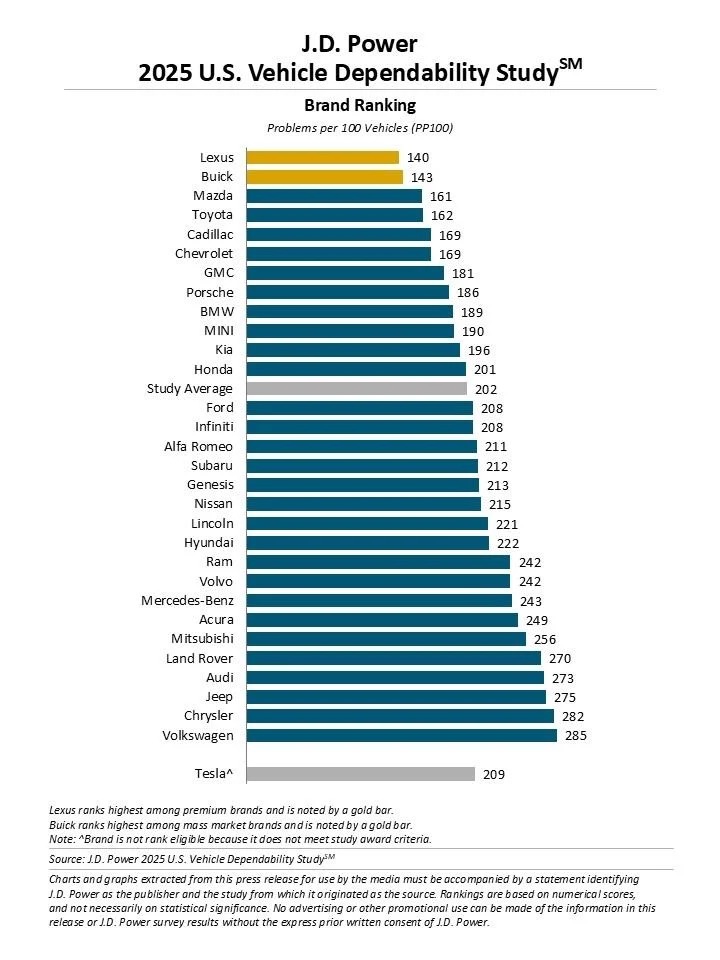
According to the 2025 U.S. Vehicle Dependability Study by J.D. Power, traditional hybrid vehicles emerged as the most reliable category with an impressive score of 199 problems per 100 vehicles (PP100). Following closely was the conventional gasoline-powered car at 200 PP100. Battery electric vehicles (BEVs) ranked third with a score of 223 PP100; diesel engines were in fourth place at 233 PP100; while plug-in hybrids (PHEVs) landed last with a score of 242 PP100.
Contextual Considerations for BEV Reliability
It’s crucial to note that this analysis focuses on vehicles that are three years old—meaning many BEV models assessed were relatively new when they first hit the market. Newly released products often encounter more initial issues as teething problems arise in technology and manufacturing processes; these challenges tend to be resolved over time as quality improves.
Notably, Tesla—the leading brand in U.S. EV sales—continues to grapple with reliability concerns tied to its rapid production strategy reminiscent of Silicon Valley’s “move fast and break things” philosophy. Although there have been improvements over time within Tesla’s product offerings, it still ranks among the least dependable automotive brands based on this study.
Software Issues: A Redefinition of Recalls?
The discussion around software flaws is particularly relevant here—especially concerning Tesla again, which often manages “recalls” through simple software updates executed remotely via over-the-air capabilities rather than requiring owners to visit service centers physically. These types of rectifications should arguably be classified differently than typical mechanical repairs that necessitate dealership visits; blending them into overall reliability assessments can lead to potentially skewed interpretations.
Impactful External Factors Influencing Results
it’s essential also to consider external influences during vehicle creation amid global turmoil caused by both the COVID-19 pandemic and geopolitical events like Russia’s invasion of Ukraine during production periods assessed by this study. According to Jason Norton from J.D. Power: “the increase in reported issues reflects deeper industry-wide disruption prevalent during that time.” Supply chain crises along with personnel shortages post-pandemic indeed challenged manufacturers significantly.
Conclusion: A Future Perspective on EV Dependability
Given these observations derived from current data—particularly amid aberrations stemming from unusual historical circumstances—it may be prudent for consumers seeking dependably-rated automobiles either look toward newer models or allow further developments before making significant purchases based solely upon these findings possibly shifting towards improved metrics within another year or two.

Support independent coverage focused on clean technologies; contribute today! If you have insights or story suggestions for CleanTechnica or wish to advertise please reach out.
Subscribe for daily cleantech news updates.